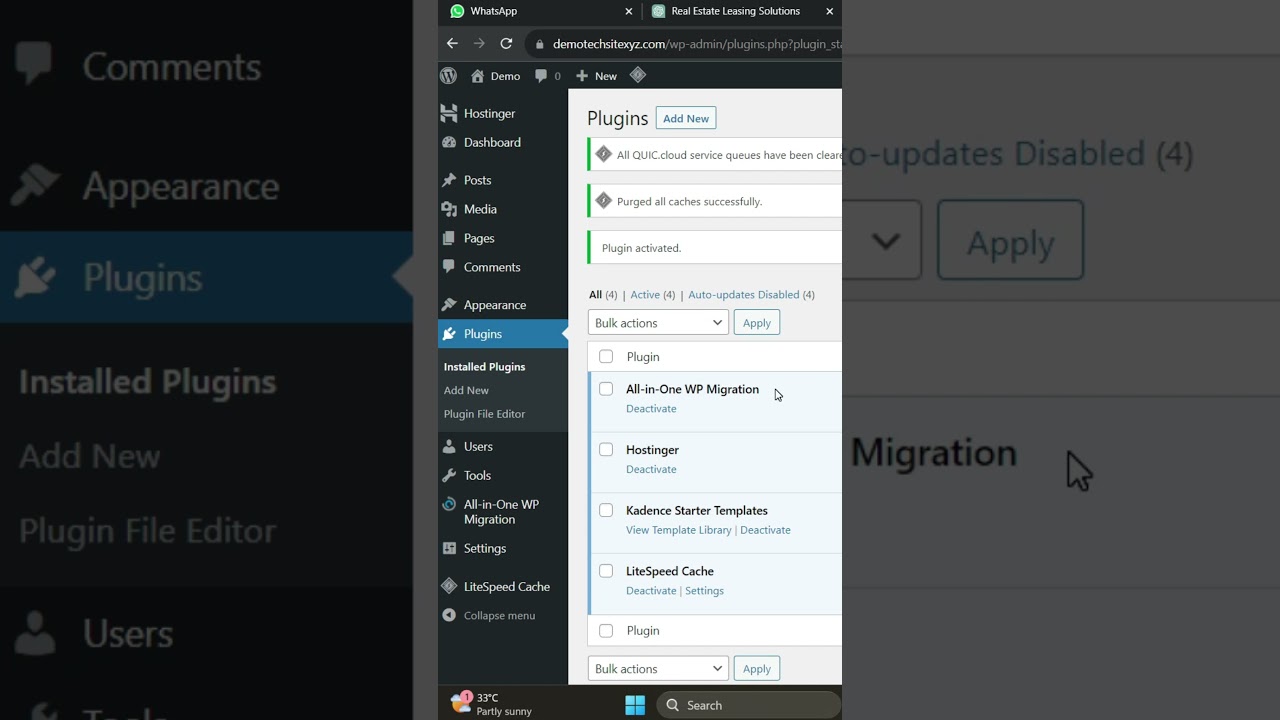
A project at a major web design conference aspired to "demystify the WordPress dashboard". During user experience workshops, new WordPress users were instructed that, by being unfamiliar with the interface, they were missing out on more efficient workflows and better site management. A session on advanced administration, "The Foundational Structure of Site Control", sought to "interrogate the relationships between user roles, menu organization, plugin conflicts, and other forms of backend complexity": Will these findings by the conference's usability panel, released after extensive testing, shock anyone? Maybe not. Site owners may be numb by now to bulletins about the intricacies, not to say frustrations, of mastering the wp admin menu.
How to Customize Your WordPress Admin Menu for Better Workflow
The WordPress admin menu is your command center, but its default layout isn't always perfect for everyone. Whether you're a site owner who wants to simplify the view for clients or a developer needing quick access to specific tools, customizing this menu can boost your productivity. It's not just about hiding things; it's about creating a logical, efficient pathway to the tasks you perform most often. By taking control of the menu, you reduce clutter, prevent confusion for other users, and make daily management much smoother.
You don't need to be a coding expert to rearrange your dashboard. Here is a straightforward method using a trusted plugin, which is the safest way for most users to make these changes without touching core files.
- Steps: First, install and activate a dedicated admin menu editor plugin from the WordPress repository. Navigate to Plugins > Add New and search for one with high ratings and active installations. After activation, you'll typically find a new item like "Menu Editor" in your settings or tools menu. Click into it to see a drag-and-drop interface representing your current admin sidebar. From here, you can simply drag menu items to reorder them, click to rename labels, or check boxes to hide certain items from specific user roles. Always remember to save your changes and then log out and back in to see the updated menu from the perspective of the user role you edited.
Can I add custom items to the WordPress admin menu?
Yes, you absolutely can add custom links or pages to the admin menu. This is a powerful way to integrate tools, link to external dashboards, or create quick-access pages for site documentation. For instance, if you frequently check your site's analytics on another platform, you can add a direct link in the menu. Developers often use this feature to add custom post type archives or specific settings panels they've built. The process usually involves adding a few lines of code to your theme's functions.php file or, more safely, using a plugin designed for menu management that includes an "Add New Item" feature.
When adding custom items, it's important to consider the user experience. Place the new link in a logical sub-menu where users would expect to find it. For example, a link to a video management dashboard might fit well under the Media section. You can also control which user roles see the new item, keeping your admin area clean for contributors or authors. This level of customization helps in creating a professional and tailored backend for yourself or your clients, making complex sites easier to handle.
If coding isn't your preference, several robust plugins offer a visual interface for this task. They allow you to specify the menu title, the URL or WordPress slug, the icon from the Dashicons set, and the exact position in the menu hierarchy. This method is reversible and doesn't risk breaking your site if you make a mistake. After adding a custom item, be sure to test it by clicking on it to confirm it leads to the correct destination and that it's only visible to the intended users.
What should I do if a plugin messes up my admin menu?
Plugin conflicts are a common cause of a disorganized or broken admin menu. The first step is to deactivate all plugins temporarily. If the menu returns to normal, reactivate your plugins one by one, checking the menu after each activation, to identify the culprit. Once found, check that plugin for updates, as the issue may already be fixed. You can also look into specialized plugins for managing header and menu structures that might offer more stable control than the conflicting one.
How do I change the order of items in the admin menu?
Reordering menu items is simple with the right tool. Using a dedicated admin menu editor plugin, you get a drag-and-drop interface. You simply grab the menu item—like "Posts" or "Pages"—and move it up or down the list. Some plugins even let you create custom separators or headings to group related items. This is especially useful if you want to prioritize content creation tools at the top or group all settings-related items together. Remember, changes can be applied globally or tailored to specific user roles.
Is it safe to hide menu items from certain users?
Hiding menu items is a standard and safe practice for improving security and usability. By using a reliable plugin to restrict access based on user roles, you ensure that authors don't see plugin settings and clients aren't confused by technical panels. This doesn't delete the items; it simply makes them invisible to unauthorized users. It's a fundamental part of managing your site's visibility and user permissions properly. Always double-check role capabilities after making changes to ensure users can still perform their necessary tasks.
What's the difference between the admin menu and the toolbar?
It's easy to mix up the admin menu and the toolbar, but they serve different purposes. The admin menu is the vertical sidebar on the left inside the WordPress dashboard, containing all the core settings, posts, pages, and plugin menus. The admin toolbar is the horizontal black bar at the very top of your screen when logged in, visible on both the front-end and back-end. It provides quick links like "Edit Page," a visit to your site, user profile options, and logout. The following table clarifies their key differences:
| Feature | Admin Menu (Sidebar) | Admin Toolbar (Top Bar) |
|---|---|---|
| Location | Left side of the dashboard | Top of all screens when logged in |
| Primary Use | Full access to all dashboard functions | Quick, contextual actions and links |
| Visibility | Only in the wp-admin area | On both front-end and back-end |
| Customization | Highly customizable via plugins/code | More limited, often requires code |
Why can't I see certain options in my menu?
If menu options are missing, your user role likely lacks the necessary permissions. Administrators see almost everything, while Editors, Authors, and Contributors see progressively less. A plugin or theme might also be incorrectly hiding items. First, check your role in Users > Your Profile. If you're an admin and items are missing, a conflict is probable. Sometimes, the issue is specific, like a missing function for duplicating content that a plugin should provide. Deactivating plugins is the standard troubleshooting step to restore visibility.
Can I change the admin menu for a multisite network?
Customizing the admin menu in a WordPress Multisite network follows similar principles but with added layers. Network-wide changes must be made by a Super Admin, often requiring a plugin that is Multisite-compatible or custom code placed in network-specific files. You can standardize the menu across all sites for consistency or set different rules per site. It's a powerful way to enforce branding and simplify the experience for users who manage multiple sites within the network, but it requires careful planning to avoid breaking functionality on individual sites.
How does the admin menu affect site speed?
A poorly optimized admin menu can slow down your dashboard loading time. Each plugin that adds a top-level menu item makes extra calls to the database and loads additional scripts. A menu overloaded with dozens of items, especially from low-quality plugins, increases this overhead. To keep the admin fast, regularly audit your plugins, remove unused ones, and consider using a menu editor to clean up and organize the items. A leaner menu isn't just about looks—it directly contributes to a more responsive and efficient management experience. For broader performance insights, you might explore discussions on optimal hosting and domain configurations that affect overall speed.